Chipotle Nutrition Menu with Prices: Calories, Protein, Carbs & Healthy Picks
Choosing a meal at Chipotle can be easy when you know what is on your plate. The Chipotle nutrition menu gives you a closer look at calories, protein, carbohydrates, fat, and other nutritional details, making it easier to build a meal that fits your eating habits. Whether you want something filling, lighter, or high in protein, checking the nutrition information can help you decide.
Chipotle offers plenty of ways to customize your order, from burritos and bowls to tacos, salads, and sides. Ingredients such as chicken, steak, beans, rice, vegetables, cheese, and guacamole can change the overall nutritional value of your meal. Paying attention to portions can also make a noticeable difference.
In this guide, you’ll find useful details from the Chipotle nutrition menu to help you compare popular choices and create a meal that works for you. It’s a simple way to make more informed choices without giving up the flavors you enjoy at Chipotle.
Chipotle Nutrition Menu with Prices
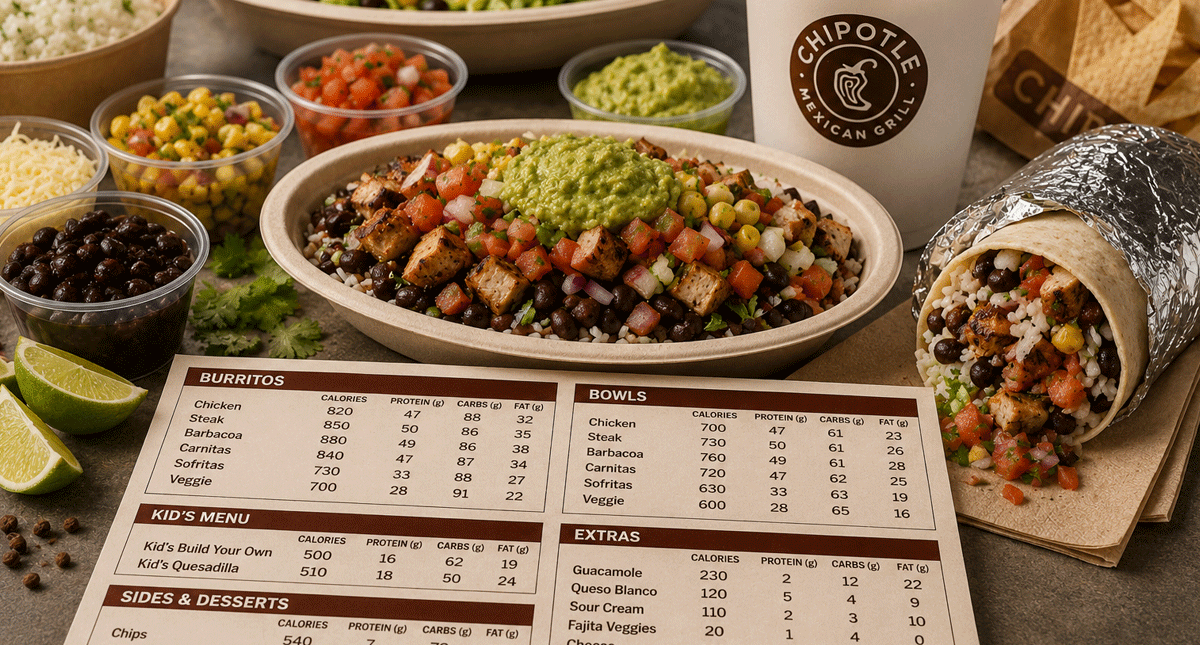
The Chipotle nutrition menu helps you compare calories, protein, and carbohydrates. You can customize nearly every meal to match your nutrition goals. Portion choices can change the final nutrition numbers significantly. Chipotle also provides an official nutrition calculator for customized orders.
Burritos
| Item | Prices | Calories | Protein | Carbs |
|---|---|---|---|---|
| Chicken Burrito | $11.00–$12.50 | 1,100–1,300 | 55–65g | 120–140g |
| Steak Burrito | $11.50–$13.00 | 1,100–1,300 | 50–60g | 120–140g |
| Barbacoa Burrito | $11.50–$13.00 | 1,100–1,300 | 50–60g | 120–140g |
| Carnitas Burrito | $11.00–$12.50 | 1,100–1,300 | 45–55g | 120–140g |
| Sofritas Burrito | $10.50–$12.00 | 950–1,150 | 30–40g | 125–145g |
Chipotle burritos offer a filling combination of protein, rice, beans, vegetables, and flavorful toppings. Each burrito can vary greatly based on your ingredient choices and portion sizes. The prices usually range from $10.50 to $13.00, depending on your protein selection. The following options provide a useful look at calories, protein, and carbohydrates.
Chicken Burrito costs around $11.00–$12.50, depending on your location and customization. It typically includes chicken, rice, beans, salsa, cheese, lettuce, and other toppings. This combination delivers approximately 1,100–1,300 calories and 55–65g protein. It also provides about 120–140g carbohydrates. Chicken makes this burrito a strong choice for protein-focused meals.
Steak Burrito costs approximately $11.50–$13.00 at many Chipotle locations. You can pair steak with rice, beans, fajita vegetables, salsa, cheese, and lettuce. The estimated calorie range reaches 1,100–1,300 calories. It also contains around 50–60g protein and 120–140g carbohydrates. Steak brings a richer flavor and makes this burrito especially satisfying.
Barbacoa Burrito generally costs about $11.50–$13.00 before additional customizations. It combines tender barbacoa with rice, beans, salsa, cheese, lettuce, and optional toppings. This burrito contains roughly 1,100–1,300 calories. You can expect approximately 50–60g protein and 120–140g carbohydrates. Its seasoned beef flavor makes it a must-try for bold-tasting burrito fans.
Carnitas Burrito usually costs around $11.00–$12.50, depending on your restaurant location. Carnitas pair well with beans, rice, fresh salsa, cheese, lettuce, and guacamole. The estimated calorie range sits around 1,100–1,300 calories. It provides approximately 45–55g protein and 120–140g carbohydrates. Carnitas offer a savory option with a distinctive pork flavor.
Sofritas Burrito costs roughly $10.50–$12.00 and offers a plant-based protein choice. Sofritas combine seasoned tofu with rice, beans, salsa, lettuce, and other toppings. This option contains approximately 950–1,150 calories. It provides around 30–40g protein and 125–145g carbohydrates. Sofritas make a great choice for guests seeking a meat-free burrito.
Your toppings can significantly change each burrito’s overall nutrition and calorie count. Cheese, sour cream, guacamole, and extra rice can quickly increase calories. Fajita vegetables, fresh salsa, and lettuce add flavor without adding many calories. Choosing toppings carefully helps you create a more balanced meal.
These burritos remain popular because they offer generous portions and plenty of customization. Chicken suits protein-focused diners, while steak and barbacoa deliver richer flavors. Carnitas provide a satisfying pork option, while sofritas offer a plant-based alternative. The Chipotle nutrition menu helps you compare these choices before placing your order.
Bowls
| Item | Prices | Calories | Protein | Carbs |
|---|---|---|---|---|
| Chicken Bowl | $11.00–$12.50 | 650–900 | 40–55g | 65–90g |
| Steak Bowl | $11.50–$13.00 | 650–900 | 40–50g | 65–90g |
| Barbacoa Bowl | $11.50–$13.00 | 650–900 | 40–50g | 65–90g |
| Carnitas Bowl | $11.00–$12.50 | 650–900 | 35–50g | 65–90g |
| Sofritas Bowl | $10.50–$12.00 | 600–850 | 25–35g | 70–95g |
Chipotle bowls offer flexible meals with protein, rice, beans, vegetables, salsa, and toppings. They also make portion control easier than burritos. Prices generally range from $10.50 to $13.00 before additional customizations. Your ingredient choices can significantly change each bowl’s calories and macronutrients.
The Chicken Bowl costs around $11.00–$12.50, depending on your location and selected toppings. You can choose chicken, rice, beans, fajita vegetables, salsa, lettuce, and cheese. This bowl contains approximately 650–900 calories and 40–55g protein. It also provides around 65–90g carbohydrates. Chicken makes this bowl a must-try for protein-focused diners.
The Steak Bowl usually costs about $11.50–$13.00 at Chipotle locations. Steak pairs well with rice, beans, fajita vegetables, fresh salsa, lettuce, and cheese. This combination provides roughly 650–900 calories and 40–50g protein. It contains approximately 65–90g carbohydrates. Steak gives the bowl a richer taste and satisfying texture.
The Barbacoa Bowl costs approximately $11.50–$13.00 before extra toppings. Barbacoa works well with rice, black beans, salsa, lettuce, cheese, and fajita vegetables. You can expect around 650–900 calories from this bowl. It provides approximately 40–50g protein and 65–90g carbohydrates. Its seasoned beef flavor makes it worth trying.
The Carnitas Bowl generally costs around $11.00–$12.50, depending on location and customization. Carnitas pair nicely with rice, beans, salsa, lettuce, cheese, and guacamole. This bowl contains approximately 650–900 calories and 35–50g protein. It also offers around 65–90g carbohydrates. Carnitas provide a savory pork flavor that many guests enjoy.
The Sofritas Bowl costs roughly $10.50–$12.00 and provides a plant-based protein option. Sofritas combine seasoned tofu with rice, beans, salsa, lettuce, and fajita vegetables. This bowl contains approximately 600–850 calories. It provides around 25–35g protein and 70–95g carbohydrates. Sofritas make an excellent choice for meat-free diners.
Toppings can quickly change the nutritional profile of any Chipotle bowl. Guacamole, cheese, sour cream, and extra rice can increase calories significantly. Fajita vegetables, fresh salsa, and lettuce add flavor with fewer calories. You can adjust portions according to your nutritional goals and appetite.
These bowls deserve attention because they offer excellent customization and satisfying ingredient combinations. Chicken suits higher-protein meals, while steak and barbacoa deliver richer flavors. Carnitas provide a flavorful pork option, while sofritas suit plant-based preferences. The Chipotle nutrition menu helps you compare these options before ordering.
Tacos
| Item | Prices | Calories | Protein | Carbs |
|---|---|---|---|---|
| Chicken Tacos | $11.00–$12.50 | 510–750 | 30–45g | 45–65g |
| Steak Tacos | $11.50–$13.00 | 520–760 | 30–40g | 45–65g |
| Barbacoa Tacos | $11.50–$13.00 | 520–760 | 30–40g | 45–65g |
| Carnitas Tacos | $11.00–$12.50 | 520–760 | 28–40g | 45–65g |
| Sofritas Tacos | $10.50–$12.00 | 500–730 | 20–30g | 50–70g |
Chipotle tacos offer a flexible option for diners who prefer smaller portions. You can customize them with protein, beans, rice, salsa, cheese, and vegetables. Prices generally range from $10.50 to $13.00, depending on your protein and toppings. Your selections can change the final calorie and carbohydrate totals.
Chicken Tacos cost around $11.00–$12.50, depending on your location and chosen ingredients. You can fill them with chicken, beans, salsa, cheese, lettuce, and fajita vegetables. They provide approximately 510–750 calories and 30–45g protein. Their carbohydrate content usually reaches around 45–65g. Chicken makes these tacos a great protein-focused choice.
Steak Tacos usually cost approximately $11.50–$13.00 before additional customizations. Steak pairs well with beans, rice, fresh salsa, cheese, lettuce, and fajita vegetables. These tacos contain roughly 520–760 calories. They provide around 30–40g protein and 45–65g carbohydrates. Their savory steak flavor makes them a must-try option.
Barbacoa Tacos cost around $11.50–$13.00 at many Chipotle locations. You can combine barbacoa with beans, rice, salsa, cheese, lettuce, and vegetables. This combination provides approximately 520–760 calories and 30–40g protein. It also contains around 45–65g carbohydrates. Barbacoa adds a seasoned beef flavor that stands out.
Carnitas Tacos generally cost about $11.00–$12.50, depending on your location. Carnitas pair naturally with beans, rice, salsa, lettuce, cheese, and guacamole. These tacos contain approximately 520–760 calories. They provide around 28–40g protein and 45–65g carbohydrates. Their savory pork flavor makes them appealing for meat lovers.
Sofritas Tacos cost approximately $10.50–$12.00 and provide a plant-based protein option. Sofritas work well with beans, rice, salsa, lettuce, fajita vegetables, and guacamole. These tacos contain around 500–730 calories. They provide approximately 20–30g protein and 50–70g carbohydrates. Sofritas make a strong choice for meat-free diners.
Your toppings can noticeably change the nutrition of any taco order. Cheese, sour cream, guacamole, and extra rice can increase calories quickly. Lettuce, fajita vegetables, and fresh salsa provide flavorful additions with fewer calories. Choosing ingredients carefully can help you create a meal that fits your preferences.
Tacos offer variety without requiring one large burrito or bowl. Chicken provides more protein, while steak and barbacoa deliver richer beef flavors. Carnitas bring savory pork notes, while sofritas provide a meat-free alternative. The Chipotle nutrition menu helps you compare these options before making your order.
Quesadillas
| Item | Prices | Calories | Protein | Carbs |
|---|---|---|---|---|
| Chicken Quesadilla | $11.00–$13.00 | 830–1,000 | 50–60g | 45–60g |
| Steak Quesadilla | $11.50–$13.50 | 850–1,020 | 50–60g | 45–60g |
| Barbacoa Quesadilla | $11.50–$13.50 | 850–1,020 | 48–58g | 45–60g |
| Carnitas Quesadilla | $11.00–$13.00 | 850–1,020 | 45–55g | 45–60g |
| Sofritas Quesadilla | $10.50–$12.50 | 800–970 | 35–45g | 50–65g |
Chipotle quesadillas offer a cheesy meal with your choice of protein and flavorful toppings. You can pair them with rice, beans, salsa, vegetables, or guacamole. Prices generally range from $10.50 to $13.50, depending on your protein selection. Ingredient choices can also change the final calories and nutrients.
Chicken Quesadilla costs around $11.00–$13.00, depending on your location and customizations. It combines chicken, melted cheese, and your preferred sides or toppings. This option contains approximately 830–1,000 calories and 50–60g protein. It provides around 45–60g carbohydrates. Chicken makes this quesadilla a must-try for protein-focused diners.
Steak Quesadilla usually costs approximately $11.50–$13.50 before extra additions. Steak pairs well with cheese, rice, beans, salsa, lettuce, and fajita vegetables. This quesadilla provides roughly 850–1,020 calories. It contains around 50–60g protein and 45–60g carbohydrates. Its rich steak flavor creates a satisfying choice for hearty appetites.
Barbacoa Quesadilla costs about $11.50–$13.50, depending on your restaurant location. You can combine barbacoa with cheese, beans, rice, salsa, vegetables, and other toppings. This option contains approximately 850–1,020 calories. It provides around 48–58g protein and 45–60g carbohydrates. Barbacoa delivers a seasoned beef flavor that makes this option memorable.
Carnitas Quesadilla generally costs around $11.00–$13.00 before additional customizations. Carnitas work well with cheese, beans, rice, fresh salsa, and fajita vegetables. This quesadilla contains approximately 850–1,020 calories. It provides around 45–55g protein and 45–60g carbohydrates. Its savory pork flavor makes it a strong choice for meat lovers.
Sofritas Quesadilla costs roughly $10.50–$12.50 and provides a plant-based protein alternative. Sofritas pair with cheese, beans, rice, salsa, lettuce, and fajita vegetables. This option contains approximately 800–970 calories. It provides around 35–45g protein and 50–65g carbohydrates. Sofritas make a flavorful choice for guests avoiding meat.
Additional toppings can change the nutritional value of your quesadilla considerably. Guacamole, sour cream, cheese, and extra rice can increase calories quickly. Fresh salsa, lettuce, and fajita vegetables can add flavor and texture. Choosing sides carefully helps you create a meal that matches your appetite.
Quesadillas stand out because they combine melted cheese with customizable protein choices. Chicken offers a familiar flavor, while steak and barbacoa provide richer beef options. Carnitas deliver savory pork flavor, while sofritas offer a meat-free alternative. The Chipotle nutrition menu helps you compare these choices before ordering.
Sides & Extras
| Item | Prices | Calories | Protein | Carbs |
|---|---|---|---|---|
| Chips | $2.00–$2.50 | 540 | 7g | 73g |
| Chips & Queso Blanco | $5.00–$6.00 | 780 | 15g | 81g |
| Chips & Guacamole | $5.00–$6.00 | 770 | 10g | 83g |
| Queso Blanco | $2.50–$3.00 | 120 | 4g | 3g |
| Guacamole | $2.50–$3.00 | 230 | 3g | 8g |
| Side of Rice | $2.00–$3.00 | 210–240 | 4–5g | 40–45g |
| Side of Beans | $2.00–$3.00 | 130–170 | 8–9g | 22–30g |
Chipotle sides and extras can add crunch, creaminess, flavor, or extra substance to your meal. Prices start around $2.00 and reach $6.00 for larger combinations. You can choose chips, queso, guacamole, rice, or beans alongside your main order. These options also create easy ways to customize your meal.
Chips cost approximately $2.00–$2.50 and provide a crunchy addition to any order. They contain about 540 calories, 7g protein, and 73g carbohydrates. Their salty texture pairs especially well with salsa, queso, or guacamole. Chips make a must-try choice when you want something crispy alongside your main meal.
Chips & Queso Blanco cost around $5.00–$6.00 and combine crispy chips with creamy queso. The serving contains approximately 780 calories, 15g protein, and 81g carbohydrates. Queso adds a rich, savory flavor that complements the crunchy chips. This pairing suits diners who enjoy indulgent sides with their meals.
Chips & Guacamole usually cost about $5.00–$6.00 and provide a creamy, fresh combination. This option contains approximately 770 calories, 10g protein, and 83g carbohydrates. Guacamole adds avocado flavor and a smooth texture to every bite. It remains a must-try for guests who enjoy classic chips with fresh toppings.
Queso Blanco costs approximately $2.50–$3.00 and works well with chips, tacos, bowls, or burritos. It contains around 120 calories, 4g protein, and 3g carbohydrates. Its creamy consistency adds richness without requiring a full side order. Queso makes a useful extra when you want more flavor.
Guacamole costs around $2.50–$3.00 and provides approximately 230 calories per serving. It contains about 3g protein and 8g carbohydrates. You can add guacamole to bowls, tacos, burritos, or enjoy it with chips. Its creamy avocado texture makes it one of the most popular extras.
A Side of Rice costs approximately $2.00–$3.00 and adds substantial carbohydrates. Depending on the preparation, it provides around 210–240 calories and 4–5g protein. You can pair rice with beans, protein, salsa, or vegetables for extra volume. A Side of Beans costs about $2.00–$3.00 and provides 130–170 calories, 8–9g protein, and 22–30g carbohydrates.
Sides and extras can change your meal’s nutritional profile quickly. Chips and queso create a more indulgent combination, while beans add protein and carbohydrates. Rice provides extra substance, while guacamole contributes creamy texture and avocado flavor. The Chipotle nutrition menu helps you compare these extras before customizing your order.
Rice & Bean
| Item | Prices | Calories | Protein | Carbs |
|---|---|---|---|---|
| White Rice | $2.00–$3.00 | 210–240 | 4–5g | 40–45g |
| Brown Rice | $2.00–$3.00 | 210–240 | 4–5g | 33–40g |
| Black Beans | $2.00–$3.00 | 130–170 | 8–9g | 22–30g |
| Pinto Beans | $2.00–$3.00 | 130–170 | 8–9g | 22–30g |
Rice and beans form the foundation of many Chipotle bowls, burritos, and other meals. They add carbohydrates, protein, fiber, and satisfying texture. Chipotle lists separate nutrition values for its rice and bean choices.
White rice delivers a mild flavor that works with almost every protein. A serving generally contributes around 210–240 calories. It provides approximately 4–5g protein and 40–45g carbs. The citrusy seasoning also complements salsa, beans, chicken, steak, and vegetables.
Brown rice offers a heartier texture and slightly lower carbohydrate content. It provides approximately 210–240 calories with 4–5g protein. Carbohydrates typically fall around 33–40g per serving. Brown rice makes a practical choice for diners seeking more whole-grain texture.
Black beans add plant-based protein and substantial fiber to your meal. They generally provide around 130–170 calories and 8–9g protein. Their carbohydrate content reaches approximately 22–30g. Their earthy flavor pairs especially well with chicken, sofritas, salsa, and guacamole.
Pinto beans provide another flavorful source of plant-based protein. A serving generally contains 130–170 calories and 8–9g protein. They contribute approximately 22–30g carbohydrates. Their creamy texture works particularly well with rice, carnitas, steak, and fresh salsa.
Combining rice with beans creates a more substantial and satisfying meal. However, adding both can increase your overall carbohydrate intake. Your choice of protein, cheese, guacamole, and sauces can raise total calories further. The Chipotle nutrition menu helps you compare these ingredients before building your order.
Lowest-Calorie Chipotle Menu Choices
| Choice | Prices | Calories | Protein | Carbs |
|---|---|---|---|---|
| Chicken Bowl | $11.00–$12.50 | 650–900 | 40–55g | 65–90g |
| Sofritas Bowl | $10.50–$12.00 | 600–850 | 25–35g | 70–95g |
| Side of Beans | $2.00–$3.00 | 130–170 | 8–9g | 22–30g |
| Side of Rice | $2.00–$3.00 | 210–240 | 4–5g | 40–45g |
Choosing lower-calorie meals at Chipotle starts with smart ingredient combinations. The Chipotle nutrition menu lets you adjust proteins, bases, toppings, and portions. Chipotle also provides a nutrition calculator for building meals around specific nutritional goals.
For the best protein choices, chicken provides a strong balance of protein and calories. Chipotle currently lists chicken at 180 calories per serving. Steak provides 150 calories, while barbacoa provides 170 calories per serving. Beans can also increase protein without adding another meat portion.
Lower-calorie bases can make a major difference in your complete meal. Choose a bowl or salad instead of a burrito when you want fewer calories. Lettuce adds volume without the carbohydrate load of rice. Light rice also helps reduce calories while keeping the meal filling.
Healthier toppings and salsas can add plenty of flavor without excessive calories. Fresh tomato salsa, fajita vegetables, and lettuce work well for lighter meals. Guacamole adds healthy fats but also increases total calories. Cheese, sour cream, and creamy sauces can raise calories quickly.
Portion control matters because several small additions can create a large calorie increase. Ask for light rice when you still want grains in your bowl. Choose one protein, one bean option, and several vegetable-based toppings. You can also request heavier ingredients on the side.
A simple lower-calorie order could include chicken, lettuce, fajita vegetables, and fresh tomato salsa. Adding beans provides extra protein and carbohydrates while keeping the meal balanced. Chipotle’s current High Protein-Low Calorie Bowl uses chicken, supergreens, fajita vegetables, fresh tomato salsa, and guacamole.
The best choice depends on your calorie, protein, and carbohydrate preferences. Check the Chipotle nutrition menu before ordering because customizations change nutritional totals. Building your meal ingredient by ingredient gives you much better control.
How to Build a Healthy Chipotle Meal
Building a healthy Chipotle meal starts with choosing a balanced combination. Focus on protein, vegetables, beans, and sensible portions. Chipotle lets customers customize meals across proteins, bases, toppings, and sides.
Start with a bowl or salad instead of a burrito. Skipping the flour tortilla can reduce your meal’s overall calorie load. A bowl also gives you more control over rice, beans, vegetables, and toppings.
Choose a protein that matches your nutritional goals and appetite. Chicken, steak, barbacoa, and sofritas provide different protein and calorie amounts. Beans can add plant-based protein and fiber alongside your selected protein.
Add vegetables to increase flavor, texture, and overall meal variety. Fajita vegetables and lettuce work especially well with bowls and salads. Fresh tomato salsa can add brightness without making your meal excessively heavy.
Keep rice portions reasonable when you want to manage carbohydrates. You can choose white rice, brown rice, or skip rice altogether. Beans provide additional substance while contributing protein, carbohydrates, and fiber.
Toppings deserve attention because small additions can increase calories quickly. Cheese, sour cream, queso, and guacamole can make meals richer. Choose one or two favorites instead of adding every available topping.
Finally, watch your sides and portion sizes carefully. Chips and queso can add substantial calories to an otherwise balanced meal. Use the Chipotle nutrition menu or calculator to check your complete customized order.
FAQs
What Is The Healthiest Thing To Eat At Chipotle?
You can build a lighter meal with a bowl or salad as your base. Choose chicken, beans, fajita vegetables, and fresh salsa for a balanced combination. Chicken provides substantial protein without adding as many calories as some richer toppings.
You should also watch portions of rice, cheese, sour cream, queso, and chips. These ingredients can increase calories quickly. Your healthiest choice depends on your calorie, protein, carbohydrate, and dietary goals.
Which Chipotle Meal Has The Most Protein?
You can get the most protein by choosing a double-protein bowl. Chicken provides 32g protein per standard serving according to Chipotle’s nutrition information. Adding beans can increase your protein while also contributing fiber and carbohydrates.
You can further increase protein by adding another protein serving. However, double portions also increase calories, so consider your overall nutritional target. Chipotle’s current menu also highlights high-protein meal options.
Is Chipotle Good For A High-Protein Diet?
Yes, you can easily build a high-protein meal at Chipotle. Choose chicken, steak, barbacoa, or another protein as your main ingredient. Adding beans can provide additional plant-based protein and make your meal more filling.
For better control, choose a bowl instead of a burrito. You can adjust rice, toppings, and sides according to your protein and calorie needs. Chipotle also currently promotes a High Protein Menu with several protein-focused options.
What Is The Lowest-Carb Meal At Chipotle?
You can create a very low-carb meal by choosing a bowl without rice or beans. Add chicken or steak, lettuce, fajita vegetables, and your preferred low-carb toppings. Avoid tortillas, chips, and large portions of rice because they contribute significant carbohydrates.
Your exact carbohydrate total depends on every ingredient you select. Use the Chipotle nutrition calculator before ordering to check your customized meal.
How Many Calories Are In A Chipotle Burrito?
A Chipotle burrito can contain approximately 740–1,210 calories. The total depends on your tortilla, protein, rice, beans, cheese, salsa, and other toppings. Adding guacamole, queso, or extra portions can push calories higher.
You can reduce the total by choosing lighter fillings and controlling portions. A bowl can also help you avoid the calories from the flour tortilla.
How Many Calories Are In A Chipotle Bowl?
A typical Chipotle burrito bowl can range from about 420–910 calories. Your actual total depends heavily on the ingredients and portions you choose. Rice, beans, protein, cheese, guacamole, and sauces can all change the final number.
You can keep your bowl lighter by choosing vegetables, lean protein, and fresh salsa. The nutrition calculator lets you build your order and review its nutritional information.
Is Chipotle Healthy For Weight Loss?
Chipotle can fit into a weight-loss plan when you control portions and total calories. Choose a bowl or salad with protein, vegetables, beans, and lighter toppings. You should also consider your overall daily calorie intake rather than judging one meal alone.
Limit high-calorie extras such as chips, queso, sour cream, and large rice portions. Checking your customized order through the Chipotle nutrition menu can make calorie management easier.
Are Chipotle Beans A Good Source Of Protein?
Yes, beans can add useful plant-based protein to your Chipotle meal. Black beans and pinto beans each provide about 8g protein per serving. They also contribute carbohydrates and fiber, which can help make your meal more satisfying.
You can combine beans with chicken, steak, or sofritas for a higher-protein meal. Beans also work well when you want more substance without adding another serving of meat.
How Can I Reduce Calories At Chipotle?
Start with a bowl or salad and choose a lean protein such as chicken. Add lettuce, fajita vegetables, and fresh salsa for more flavor and volume. You can request lighter portions of rice when you still want grains.
Skip or limit calorie-dense extras such as chips, queso, sour cream, and large amounts of cheese. Guacamole can fit your meal, but remember that it adds calories. The nutrition calculator can help you compare different combinations before ordering.
Conclusion
Making better choices at Chipotle becomes easier when you understand each ingredient. You can compare proteins, rice, beans, toppings, and sides according to your needs. The Chipotle nutrition menu gives you useful information for planning a satisfying meal.
You can keep calories lower by choosing a bowl, lean protein, vegetables, and fresh salsa. You can also control portions of rice, cheese, sour cream, queso, and guacamole. These simple choices can help you create meals that suit your calorie and protein goals.
Whether you want a high-protein meal, a lower-carb option, or a balanced lunch, customization helps. Checking the Chipotle nutrition menu before ordering can make those decisions much easier. With thoughtful ingredient choices, you can enjoy Chipotle while staying mindful of your nutrition.